Can Pilates Lose Belly Fat? An Honest Answer
Can Pilates lose belly fat? Not directly, and no form of exercise can. You cannot choose where your body takes fat from, and a thousand curl-ups will not pull it from your stomach first. What Pilates can change in your midsection is real, though, and for many people it matters more than a tape measure. This post covers both sides.
We hear this question often in first sessions. Usually a quieter one sits underneath it: will my middle ever feel strong again?
Why you cannot spot-reduce belly fat
The idea that working a muscle burns the fat sitting over it is one of the most durable myths in fitness, and it has been tested. In a 2011 randomized trial, adults did seven abdominal exercises five days a week for six weeks while keeping their diet steady. Their abdominal endurance improved. Their belly fat, waist measurement and body fat percentage did not change in any meaningful way compared with a group that did no exercise at all.1
Muscle and the fat over it are separate tissues. When your body draws on stored fat, it draws from everywhere, in an order that is personal to you. What you eat, how you sleep, stress, hormones and age all shape that far more than which exercise you choose.
So we will not tell you that a set of Pilates exercises targets belly fat, because the research does not support it.
Pilates and weight loss: a supporting role
Pilates is strength work against spring resistance or your own body weight. It builds muscle and it can be genuinely demanding. It is not designed to burn a large number of calories in an hour, and we would rather say so up front. If losing weight is your main goal, the bigger levers sit outside the studio, in what you eat and how much you move through the rest of your day. Your doctor or a registered dietitian is the right guide there. We wrote more about this in Pilates for weight loss.
Pilates can still help. Strength makes everyday movement easier, and people who enjoy how they move tend to keep moving.
What Pilates does change in your midsection
This is where Pilates has something real to offer. Joseph Pilates called the center of the body the powerhouse and built his whole method outward from it. The work trains the muscles around your middle to do their actual job, which is to hold your spine steady while your arms and legs move. Our post on Pilates for core strength goes deeper into that idea.
The deep abdominal layer
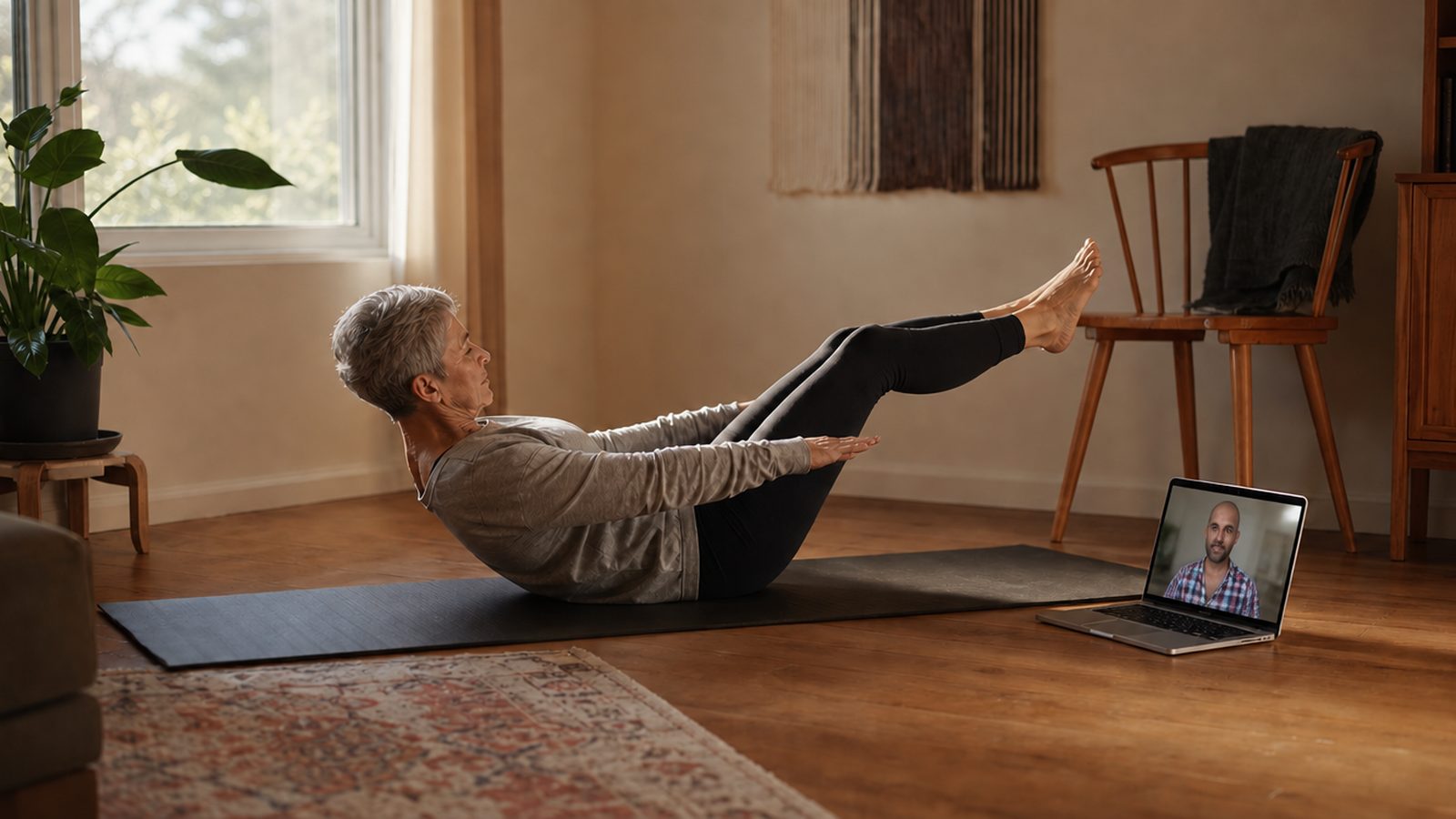
Under the six-pack muscle sits the transversus abdominis, a sheet of muscle that wraps around your middle like a wide belt. Crunches mostly work the outer layer. Pilates asks for the deep layer first. Think of the Hundred, or a roll-up done slowly enough that momentum cannot help you. What tends to change first is how your middle feels, firmer and better supported, often before anything about your weight has moved.
Posture
Much of what reads as “belly” in a mirror is posture. When the pelvis tips forward and the ribs flare open, the stomach is pushed out in front. When the upper back rounds over a desk all day, the middle folds. Pilates works on how the pelvis, ribs and spine stack on each other, which is why someone can stand differently long before their weight changes. That is alignment, not fat loss, and we will always call it that. More in our post on Pilates for posture.
Breath
Every session at our studio opens with a short check-in and then breathwork, and the breathing is not decoration. The diaphragm sits at the top of your core and the pelvic floor at the bottom, and both work with the deep abdominals. Learning to breathe wide into your back and sides, instead of holding your breath when the work gets hard, changes how your whole middle carries effort. Read more in Breathwork in Pilates.
Why a private session helps with deep core work
Deep abdominal work is hard to see from the outside. Two people can do the same roll-up and look alike, while one is using the deep layer and the other is gripping with the hip flexors and holding their breath. A teacher watching one body can catch the difference and change the cue or the spring right then.
That is how we work at West Hollywood Pilates. Every session is one-on-one, and the whole studio is yours for 55 minutes. Pilates sessions are taught by Yonatan, who trained in the classical line on the full apparatus. He will ask what you want from the work, including how you want your middle to feel, and he will tell you plainly what Pilates can and cannot do for that goal.
If you are postpartum, recovering from surgery, or have pain in your abdomen or back, check with your doctor before you start, and tell us what they said.
What to expect over time
Strength and control in your middle usually build first. You notice it getting up from a low chair, or carrying something heavy up the stairs. How you stand and breathe tends to shift after that, and it can change how your stomach looks and feels. Any change in body fat depends mostly on what happens outside the studio.
If the work stops changing after a while, that is worth a conversation, which we wrote about in the Pilates plateau.
Questions people also ask about Pilates and belly fat
Can Pilates give you a flat stomach?
Pilates can make the muscles of your middle stronger and improve how you stand and breathe, which often changes how your stomach looks. Whether it looks flat also depends on body fat, which Pilates alone does not target.
Which Pilates exercises work the core best?
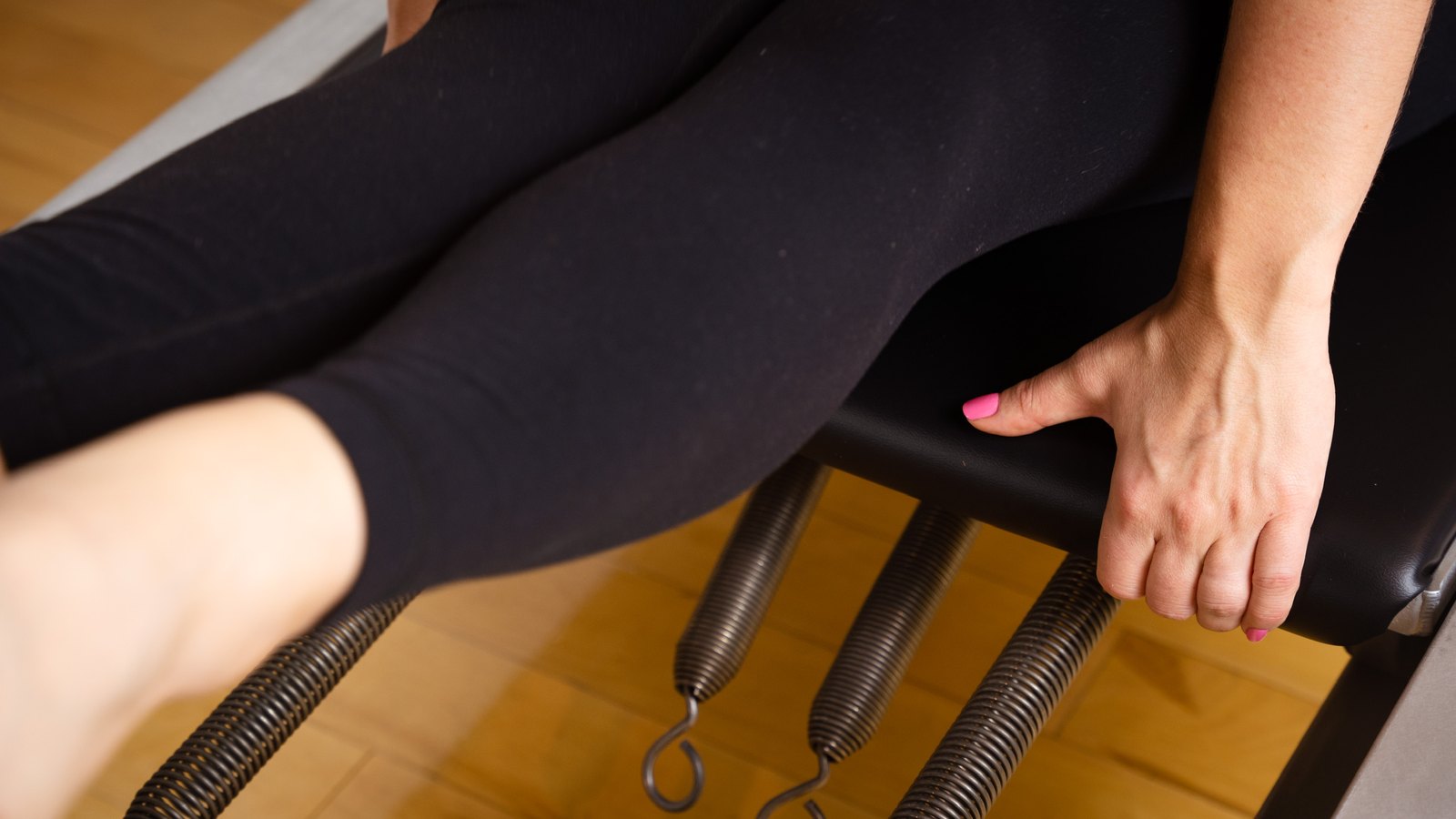
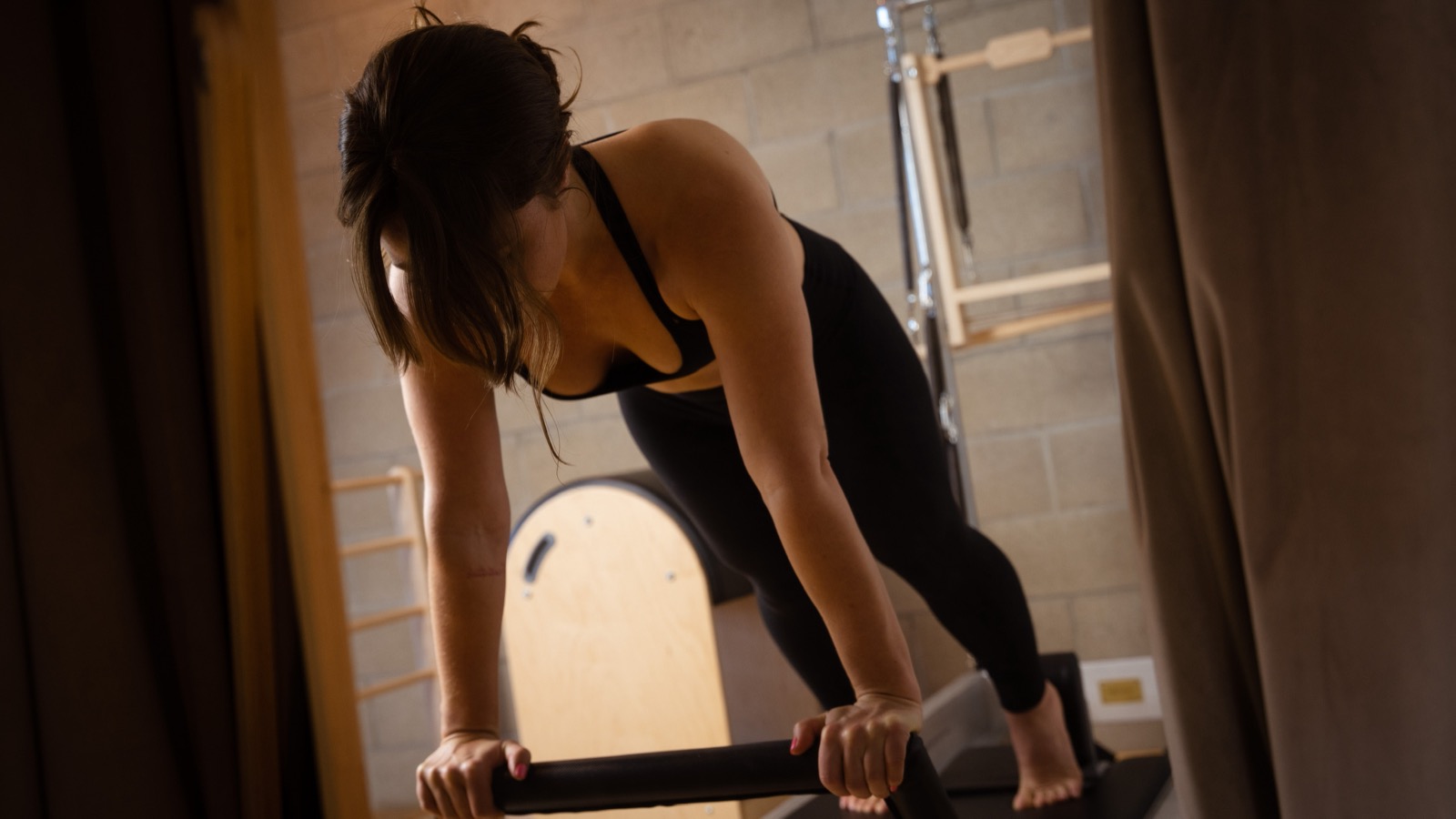
In the classical system, the Hundred, the roll-up and the single and double leg stretch are familiar starting points on the mat, and the reformer and Cadillac add springs that give your body feedback. The exercise matters less than doing it with the deep layer working, which is where a teacher helps.
How often should I do Pilates to feel a difference?
That varies with each body. Most of our clients come one to three times a week, and once a week still builds real change over time.
Try it before you decide
Book a 55-minute intro session for $65. Tell us what you want from your middle and Yonatan will say plainly what Pilates can do for it. Session and package prices are on our services page. We are at 717 N Highland Ave, STE 6, in Los Angeles, a few minutes from West Hollywood, and we also teach private sessions over Zoom.
Sources
- Vispute SS, et al. The effect of abdominal exercise on abdominal fat. Journal of Strength and Conditioning Research, September 2011.
We wrote a book.
The Classical Pilates Companion is 55 pages on the method as it was actually built. It comes with the letter we send on Tuesdays.
Come and feel the difference.
Your first private session is $65, refundable with 24 hours notice.