Is Pilates Strength Training? An Honest Answer
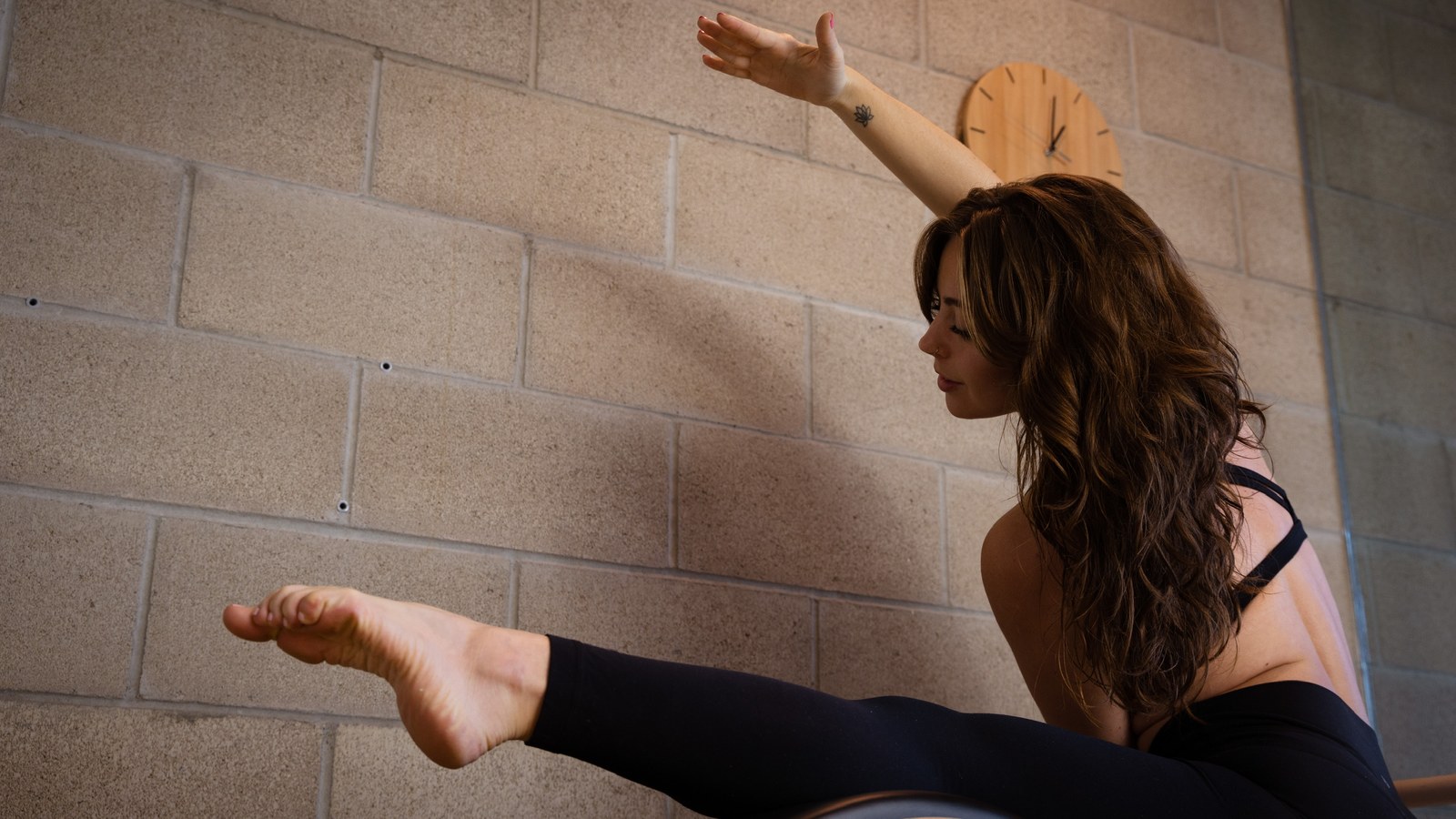
Is Pilates strength training? Yes. On the reformer you push and pull against springs, and on the mat your own body is the load, so it is a form of resistance training. What it builds best is muscular endurance and strength through your trunk and hips, and control through the full range of a joint. It will not replace heavy, progressively loaded lifting if your goal is maximal strength or a lot of muscle size. For most people it works well as their main strength practice, or alongside the gym.
What makes Pilates resistance training
The CDC asks adults to do muscle-strengthening work at least two days a week, covering the legs, hips, back, chest, abdomen, shoulders and arms, and to work “to the point where it’s hard to do another repetition without help.”1 The CDC’s list of examples does not name Pilates. A full session does fit that description, though, when it works the whole body and the effort is real.
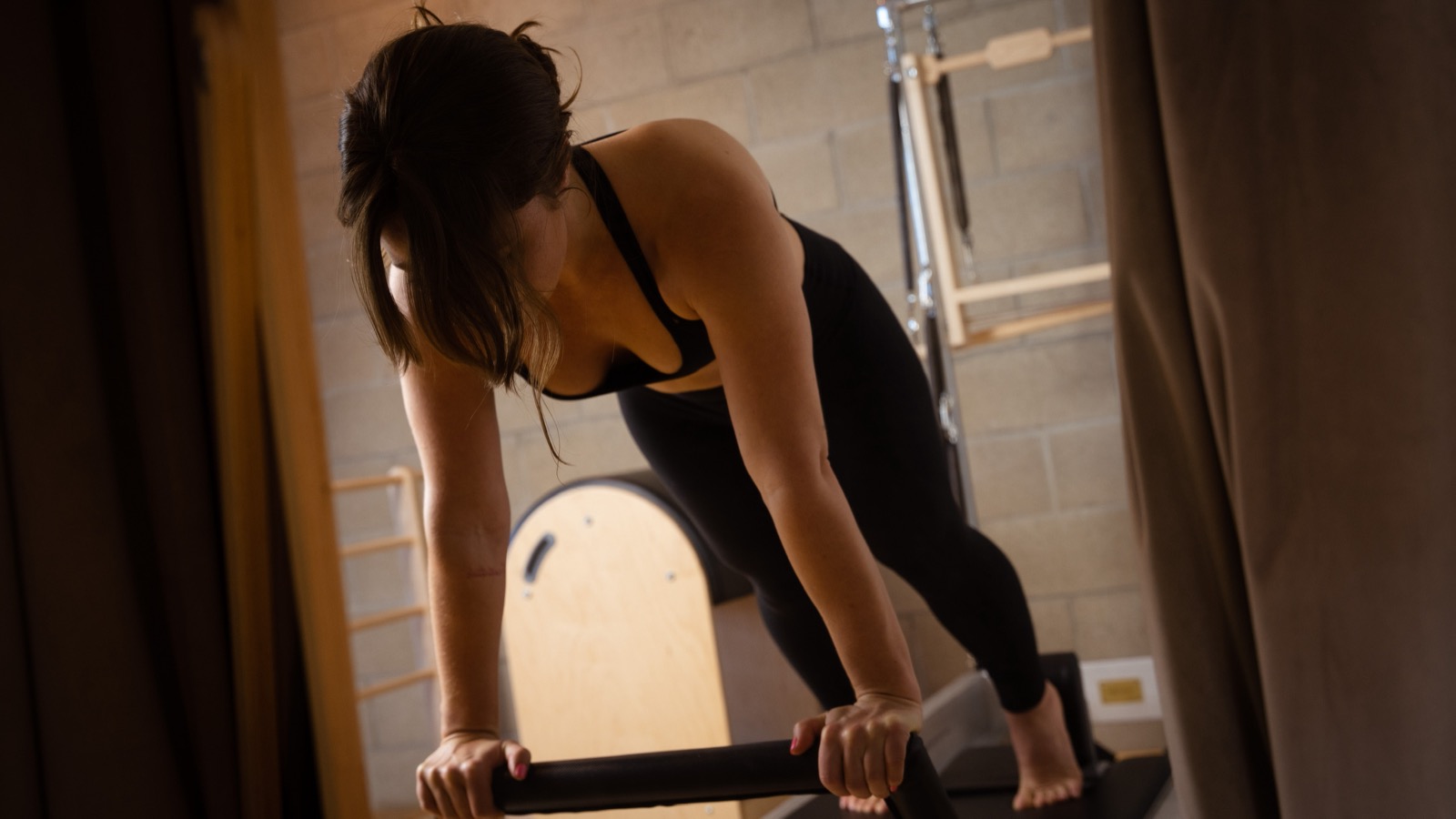
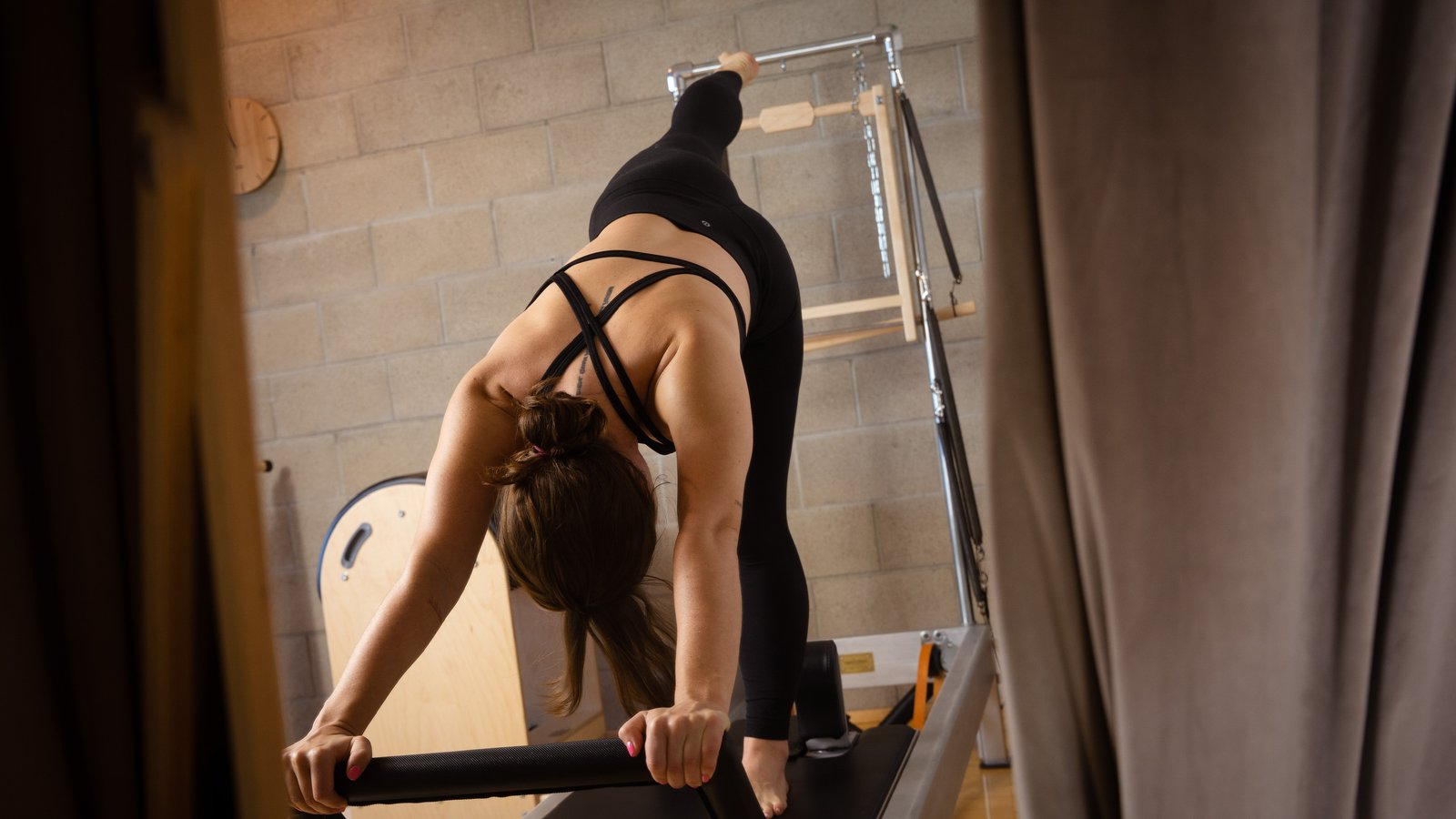
The resistance comes from two places. On the apparatus it comes from springs. A spring gets harder the further it stretches, so the toughest moment of a reformer exercise is usually at the far end of the push, which is different from a dumbbell that weighs the same the whole way. Then you have to control the carriage on the way back. The springs should never pull you home. Resisting them as they close is lengthening work for the muscle, and it is often the part people feel the next day.
On the mat there are no springs at all. Your body supplies both the resistance and the control, which is why we consider mat the hardest work in the method rather than the gentle version of it. If you have ever tried a slow, honest roll up, you know.
Heavier is not always harder, either. In a small 2024 study of experienced practitioners, a lighter spring setting on the reformer produced more trunk muscle activity than a moderate one, because the carriage was less stable and the body had to hold itself together.4 That matches what we see in the studio. Progress in classical Pilates usually comes from deeper control, and we often take springs away to make an exercise harder. We wrote more about that in the Pilates plateau.
Does Pilates build muscle?
It builds strength, and the research on that is encouraging but not strong. A 2022 systematic review of 11 randomized trials, with participants averaging around 60 years old, found no meaningful difference between Pilates and other exercise, including other strength training, for several kinds of strength. The authors rated that evidence low to very low certainty.2 A 2024 meta-analysis of 24 trials in adults over 60 found Pilates did about as well as other exercise for strength, with hints that it improves muscular endurance. Those authors were more cautious, and said the evidence is not yet good enough to recommend Pilates specifically for strength in older adults.3
The trials themselves are small and short. Many use mat work only, and the people in them are mostly women, often older adults. What holds up across them is that Pilates does about as well as other moderate exercise, and that muscular endurance keeps showing up as a benefit.
Muscle size is a different question. We have not seen a good trial showing Pilates grows muscle the way a hypertrophy program does, and it was never designed to. Joseph Pilates was clear about his aim in Return to Life, his 1945 book: “Constantly keep in mind the fact that you are not interested in merely developing bulging muscles but rather flexible ones.” He was after a body developed evenly all over.
Does Pilates tone your body, and can it build your glutes?
“Toning” usually means muscles that are firmer and more capable, and Pilates does make muscles stronger and more enduring. How much of that you can see depends on far more than one practice, genetics and sleep included, so we would not promise a look.
Glutes are a good example. Pilates works them a great deal, from footwork on the reformer to the wunda chair, where you press the pedal down while balancing with much less support than the reformer gives you. That work makes the glutes stronger and teaches them to fire when you walk and climb stairs. If your goal is to make them noticeably bigger, heavy loading and progressive volume are the tools built for that.
For the deeper work around your middle, our core strength guide goes into what the powerhouse actually is.
Is Pilates cardio?
Mostly not. A typical session is strength and control work, and your heart rate rises during harder sequences without staying up the way it does on a run or a bike.
The exception at our studio is the jumpboard. It is a padded board that attaches to the end of the reformer so you can jump while lying on your back. It raises your heart rate with much less impact than jumping on the floor, and the springs let us set exactly how hard it is. You can read more about it on our reformer Pilates in Los Angeles page. We would still treat walking or cycling as your main cardio, and Pilates as the strength and control side of your week.
Where lifting does more
A 2026 position stand from the American College of Sports Medicine says load affects strength more than it affects other training outcomes, and recommends heavy loads, around 80 percent of the most you can lift once, for building maximal strength. For muscle size it points to higher weekly volume, roughly ten sets per muscle group. It also says elastic bands and body-weight exercises are effective options.5 Springs behave a lot like bands. That comparison is our own.
Springs and body weight rarely get near that kind of load for big muscles like the legs and hips, so maximal strength and size are where lifting earns its place.
Bone is part of this conversation for many people over 50. The clearest bone results we know of come from heavy, closely supervised lifting. In one trial, postmenopausal women with low bone mass trained twice a week at very high loads and improved spine bone density compared with a low-intensity home program.6 Pilates has not shown the same effect. If bone density is your main reason for training, ask your doctor about heavy loading, and let Pilates sit beside it. Our page on Pilates after 50 covers more of that.
The two sit well in the same week. In our experience the Pilates tends to make the lifting feel better, because you get more aware of how your spine and hips move under load. We wrote about that pairing in Pilates for athletes.
Common questions
Is reformer Pilates strength training?
Yes. The springs are adjustable resistance, and a reformer session can work every major muscle group to real effort.
Can you do Pilates and lift weights?
Yes. Many people do both. If you lift heavy, give your body enough recovery between hard days, and let your teacher know what else you are training that week.
Is Pilates enough strength training on its own?
For many people who want to stay strong and move well for decades, it can be their main practice when they do it at least twice a week with real effort. If you are chasing maximal strength or size, or bone loading is a medical priority, add heavy lifting.
What a private session adds
Strength work only builds what it actually loads. When form slips, other muscles take over the job, and the muscle you meant to train gets a rest. In a private session your teacher is watching only you, so we catch that moment and adjust the springs or your position until the work lands where it should. It also means harder work when you are ready, and lighter work on a day your body asks for less. Pilates sessions at West Hollywood Pilates are taught by Yonatan, and every session is one-on-one.
Book a 55-minute intro session for $65 and tell us what strength means for you right now. Session and package prices are on our services page. We are at 717 N Highland Ave, STE 6, in Los Angeles, a few minutes from West Hollywood.
Sources
- CDC. What Counts as Physical Activity for Adults. Checked November 2026.
- Pinto JR, et al. Is pilates better than other exercises at increasing muscle strength? A systematic review. Heliyon, 2022.
- Oliveira LS, et al. Effects of pilates exercises on strength, endurance and muscle power in older adults: Systematic review and meta-analysis. Journal of Bodywork and Movement Therapies, 2024.
- Kim HJ, et al. Effect of Reformer Spring Resistance Modifications on Core Muscle Activity During Basic Core Muscle Exercises. Healthcare, 2024.
- Currier BS, et al. ACSM Position Stand: Resistance Training Prescription for Muscle Function, Hypertrophy, and Physical Performance in Healthy Adults. Medicine & Science in Sports & Exercise, 2026.
- Watson SL, et al. High-Intensity Resistance and Impact Training Improves Bone Mineral Density and Physical Function in Postmenopausal Women With Osteopenia and Osteoporosis: The LIFTMOR Randomized Controlled Trial. Journal of Bone and Mineral Research, 2018.
We wrote a book.
The Classical Pilates Companion is 55 pages on the method as it was actually built. It comes with the letter we send on Tuesdays.
Come and feel the difference.
Your first private session is $65, refundable with 24 hours notice.
Book an intro session - $65 Book a complimentary 15-minute call